 Skip to content

DMPK Services
Work with Ichor Life Sciences to better understand how your investigational product behaves in biological systems with our DMPK services.

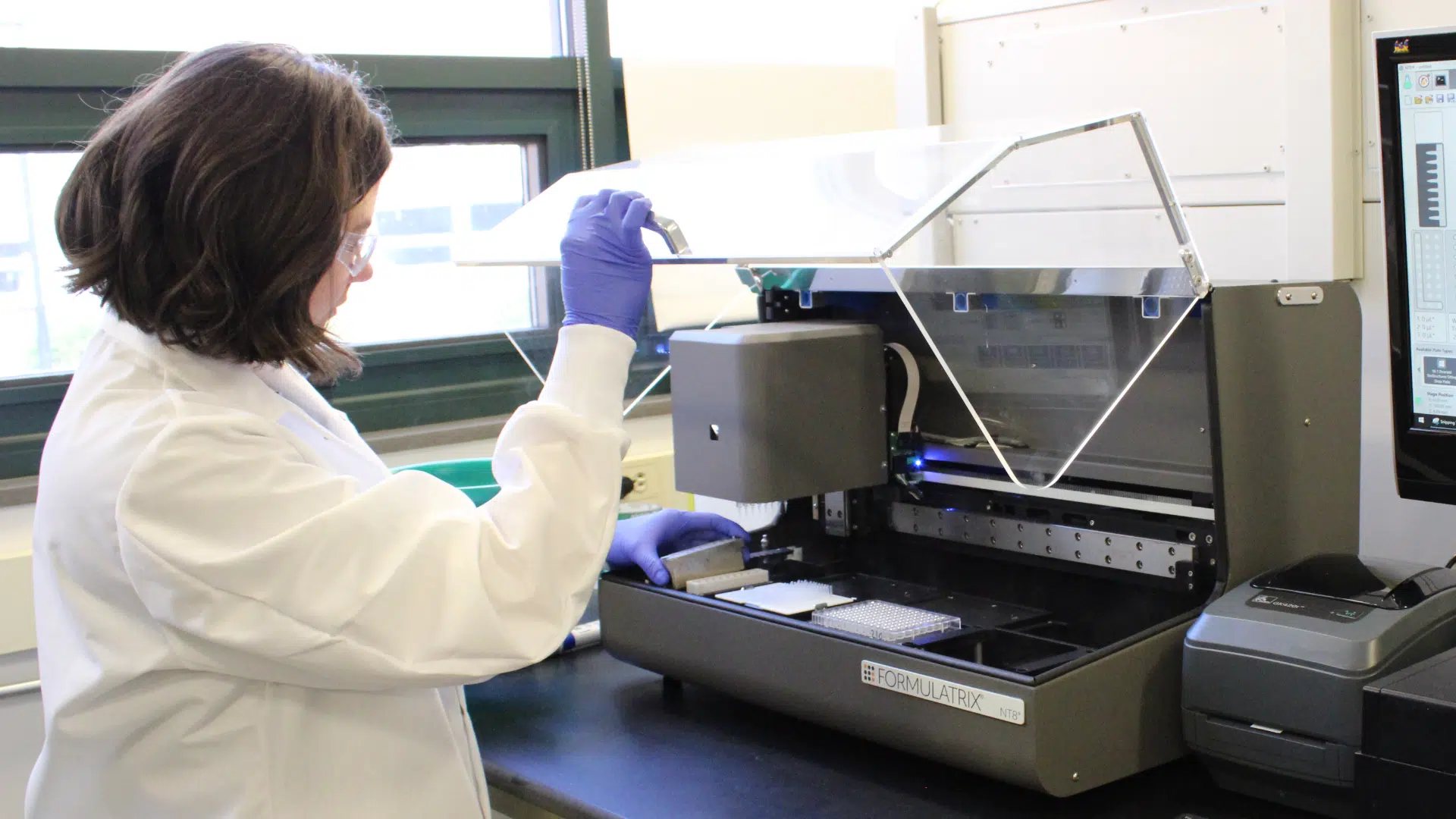
Ichor Life Sciences provides DMPK services to help development teams understand and evaluate their drug’s safety before the investigational product is approved for humans. Our scientists are experienced with the integration of pharmacokinetic data with pharmacology, bioanalysis, and downstream analytical endpoints that help interpret drug behavior in the context of the broader preclinical program.
Comprehensive DMPK Services
Build a DMPK program around the questions that matter most for candidate selection, dose strategy, exposure, and biological response.
Select ADME services
We provide select ADME assays supported by advanced LC/MS technology, offering both single and triple quadrupole systems for precise quantification, sensitivity, and robust analysis of drug metabolism and pharmacokinetics
Absorption:
- Oral bioavailability
Distribution
- Plasma Protein Binding
- Serum protein being
- Whole blood/plasma partitioning
- Tissue binding
- Brain/plasma partitioning
- Kp and Kp,uu
- Tissue distribution/Biodistribution
Metabolism
- Liver microsomal stability
- S9 stability
- Hepatocyte stability
- Plasma stability
- CYP Substrate/reaction phenotyping
- CYP inhibition
- CYP induction
- Non-CYP metabolism (MAO, CES, ect)
- Phase II metabolism
- Metabolite identification/profiling
- Metabolic pathway ID
- Species comparison of metabolism
Excretion
- Renal clearance assessment
- Urinary excretion
- Fecal excretion
- Biliary excretion
- Parent vs metabolite recovery
Pharmacokinetic services are critical in drug development, and a key component of PK/PD studies, helping in determining the appropriate dosage, optimizing drug formulations, and assessing the safety and efficacy of drugs.
- Determining Dosage
- Formulation optimization
- Safety Assessment
- Efficacy Evaluation
- Regulatory Compliance
- Multiple administration routes
Pharmacodynamic studies determine how drugs and substances exert their effects on biological systems within living organisms, providing an understanding on how the drug modulates target receptors, enzymes, and cellular pathways, analyzing the biographical processes it undergoes.
- Dose-response relationship
- Effective dosage range
- Identifying Biomarkers
- Interactions between substances
- Predictive modelling
Tissue Distribution
Determine where an investigational product distributes following administration with targeted tissue collection and fit-for-purpose bioanalysis.
- Target tissue exposure
- Organ-specific accumulation
- Blood-to-tissue relationships
- Local versus systemic exposure
- Brain penetration studies
- Route-of-administration comparisons
Support quantitative analysis of biological samples using fit-for-purpose methods selected according to molecule type, matrix, sensitivity requirements, and study objectives.
- LC-MS/MS where appropriate
- ELISA and ligand-binding assays
- Flow cytometry
- PCR-based analysis
- Biomarker analysis
- Method development and customized quantitative assays
| Modality | DMPK Services |
|---|---|
| Small Molecules | Tissue distribution, bioanalysis, PK/PD |
| Biologics | Exposure assessment, ligand-binding bioanalysis, tissue analysis |
| Proteins & Peptides | Exposure, stability, distribution, and biological response |
| Antibodies | Systemic exposure, tissue distribution, and PK/PD |
| Gene Therapies | Biodistribution and tissue-specific analytical endpoints, where applicable |
| Novel Modalities | Customized analytical, sampling, and study strategies |
DMPK Integrated With Preclinical Pharmacology
One advantage of our DMPK services is that we are a fully integrated preclinical CRO, with the ability to connect pharmacokinetic studies directly with broader pharmacology capabilities. Dosing, efficacy assessment, sample collection, bioanalysis, histology, imaging, biomarker evaluation LCMS, cytokine assays, biomarkers, flow cytometry, qPCR, histology/IHC, and functional in vivo endpoints can all be coordinated within a unified study strategy when appropriate. This approach helps development teams understand not only what the exposure was, but also what happened biologically at that exposure, supporting stronger interpretation of efficacy, dose response, target engagement, and candidate performance.
Integrated PK-PD Services
Our integrated PK/PD services bring exposure and pharmacologic response together within a unified study strategy. By aligning PK and PD endpoints, we help characterize exposure-response relationships, refine dose selection, and generate decision-ready data that can inform the next stage of your drug development.
PK Parameter/Non-Compartmental Analysis
Pharmacokinetic studies can be designed to deliver concentration-time data alone or paired with noncompartmental analysis (NCA), depending on program needs. When requested, NCA can provide key PK parameters such as Cmax, Tmax, AUC, half-life, clearance, volume of distribution, and bioavailability to support exposure comparisons and future dose-selection decisions.
- Noncompartmental analysis (NCA)
- Cmax, Tmax, AUC, t1/2, clearance, and volume of distribution
- Absolute and relative bioavailability studies
- Dose proportionality and exposure comparisons
- Plasma, blood, and tissue concentration-time profiles
-
-
Frequently Asked Questions
Answers to some of the most common questions about our ophthalmic cro service offerings.