 Skip to content
Cell Line-Derived Xenograft (CDX) Models
By accurately mimicking the behavior of cancer cells in controlled conditions, our CDX models simplify the process of developing anti-cancer treatments. They accelerate the search for precise therapies for different types of cancer by aiding in the study of drug compounds, understanding resistance mechanisms, and enhancing treatment strategies.

What are CDX Models?
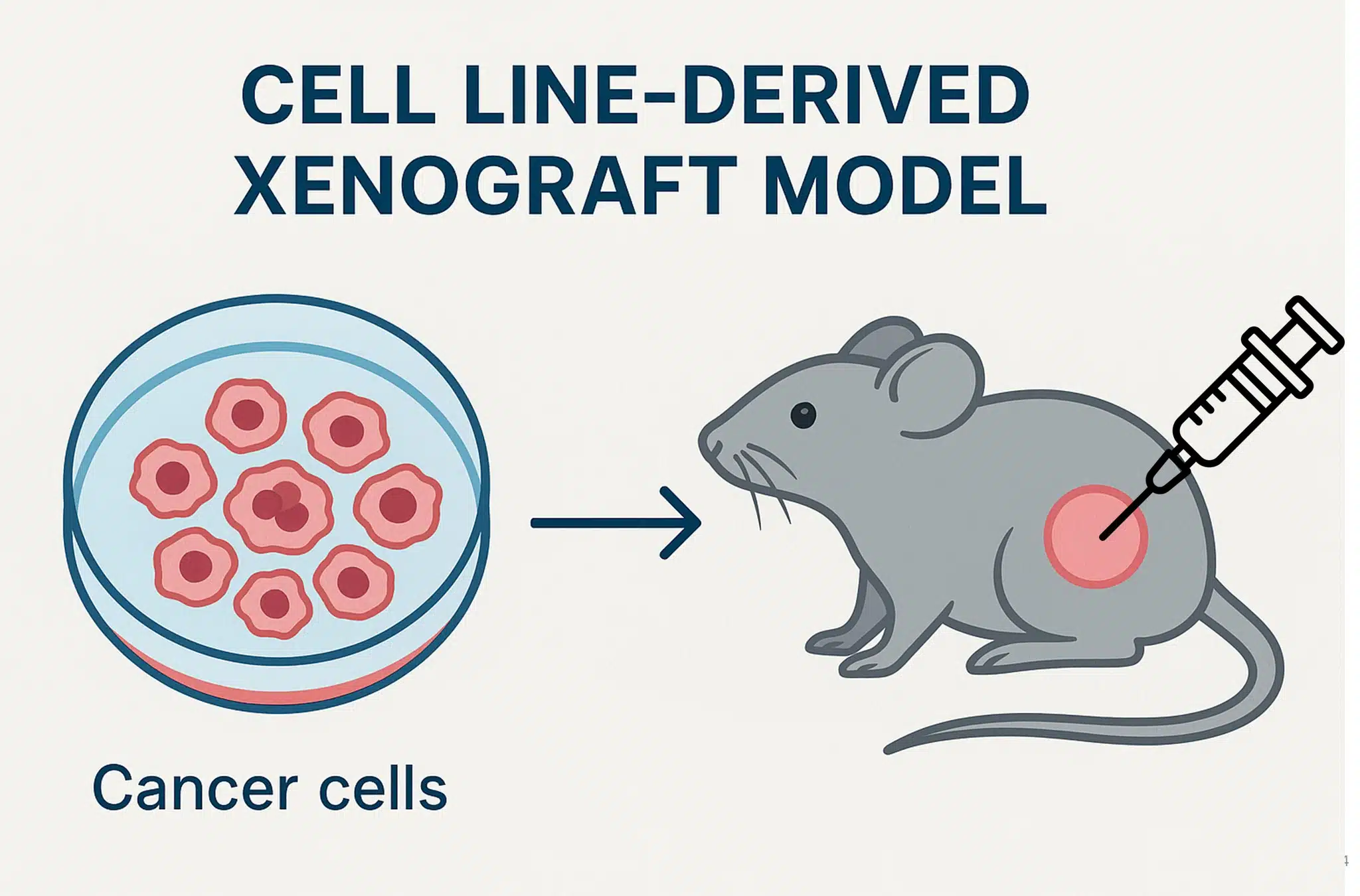
Cell-line derived xenograft models aid in advancing the formulation of anti-cancer therapies, as they provide a platform for the exploration of cancer complexities. By using cancer cells that originated in laboratories, CDX models use implanted human tumor cells in mice with suppressed immune system to create an environment that aids the progression and maturation of these tumor cells.
Advancing Cancer Research with CDX Models
High Reproducibility: Offering consistent and reliable results, cell-line derived xenograft models use the same cancer cell lines implanted into multiple mice, resulting in uniform tumor growth and treatment response, crucial for validating experimental findings.
Large Scale Testing: With our range of CDX models, you will be able to accelerate the identification of potential therapeutic candidates across a range of cancer types, facilitating high-throughput drug testing.
Genetic Manipulation: Supporting the investigation of targeted therapies and personalized medicine approaches, genetically modified CDX models facilitate the study of mutations, gene expression changes, and molecular interventions on tumor behavior.
Rapid Experimentation: By eliminating the need for the complex process of isolating patient tumor samples, these models enable fast experimentation timeline, making them particularly ideal for preliminary drug screening.
Applications of Cell-Line Derived Xenograft Models
CDX models are one of the most prominent drivers of oncology research, finding application across a variety of disciplines and serving multiple purposes, including:
Drug Efficacy Assessment With our models you will be able to assess the effectiveness of novel anti-cancer agents, providing information on the potential clinical utility of treatments by evaluating their impact on tumor growth, metastasis, and regression.
Biomarker Discovery: Tailoring therapies to individual patients leads to improved outcomes and is made possible through cell-line derived xenograft models, because they provide a platform which allows biomarkers to be identified that are linked to treatment responses and disease advancement.
Treatment Resistance Studies: By observing how tumors respond to therapies, plans can be created to overcome treatment resistance, which aids in analyzing the mechanisms behind resistance and its development, facilitating the development of effective approaches.
Personalized Medicine: The development of personalized treatment strategies with CDX mouse models in clinical settings relies on the capability to mimic patient-specific tumor behavior, in utilizing these models, researchers will be able to test a range of therapies on individual tumor profiles.
Mechanistic Studies: Research on tumor growth, metastasis, and treatment response mechanisms can be enhanced by investigating distinct pathways and interactions with these models within a controlled environment.