 Skip to content
Diet Induced Cardiovascular Disease
Diet and obesity contribute largely to the risk of developing cardiovascular diseases. Capture the human pathogenesis of atherosclerotic lesion deposition and cardiovascular dysfunction through diet-induced modeling, with a focus on high fat and high cholesterol diets. Let us help you develop the most translational atherosclerosis model to drive your drug development forward.


Diets that are high in fat and cholesterol can lead to the build up of atherosclerotic plaque. Hyperlipidemia and hypercholesterolemia also develop, capturing several aspects of clinical symptoms in people. Hematology and histopathology are robust endpoints to let us evaluate the effectiveness of treatments in multiple facets of the disease.
Clinical relevance
Atherosclerotic plaque builds up in the heart and the length of the aorta. The inflammatory and fibrotic properties of the plaque deposition also develop characteristics similar to human disease
Flexible and reliable
With several diets and strains of mice available, the most relevant model can be developed to fit your needs. DIO, pre-aged mice, or genetic models like the ApoE and LDLr mice, allow us to capture relevant aspects of the disease process.
Robust endpoints
Hematology and histopathology allow us to closely track and assess disease progress and treatment effectiveness. With microdissection techniques, this can even be on the level of specific parts of the aorta with en face staining.
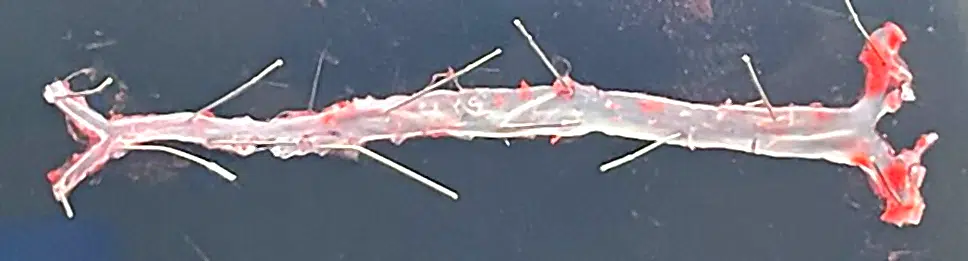
En-face staining of the aorta allows for precise evaluation of plaque deposition along the entire length of the vasculature.

Immunohistochemistry is also a powerful tool to evaluate the inflammatory properties of remodeling that occurs within the aorta or other tissues.