 Skip to content
High-Content Receptor Internalization Assays
Accelerate your R&D with Ichor’s receptor internalization expertise. Our platform integrates high-content imaging to deliver insights into receptor trafficking, internalization, and intracellular delivery, empowering biologics and targeted therapy development.

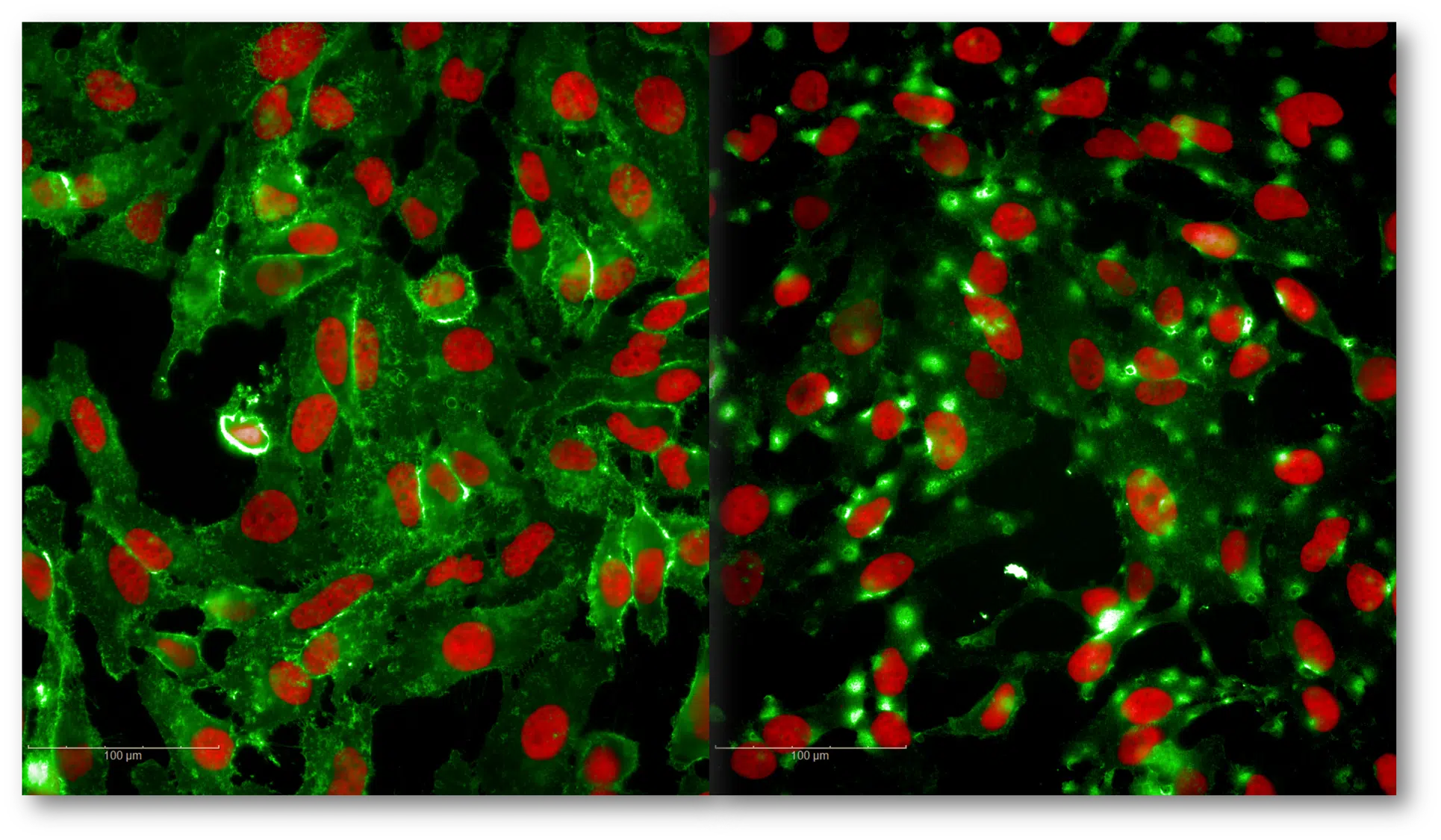
Ichor focuses on time-lapse confocal imaging leveraging reporter proteins, antibody labeling, pH-sensitive probes, and protein tagging systems to track receptor trafficking. Each assay is developed as a fit-for-purpose strategy aligned with the your biologic and mechanism of action.
Classic receptor internalization
Investigate ligand- or antibody-induced receptor engagement with quantitative tracking of internalization and trafficking, ideal for mechanism-of-action studies and targeted therapeutic development.
Receptor Tyrosine Kinase (RTKs)
Interrogate high-value targets like EGFR, HER2, and VEGFR, key drivers of proliferation, survival, and angiogenesis using our non-perturbing, in situ kinetic Akt assay to monitor real-time pathway activation.
GPCR Internalization and Signaling
Unlock high-resolution insights into GPCR activation and trafficking using FRET and fluorescent reporter assays in over 100 mammalian cell lines. Bolster your data package with in-house biophysical assays for robust, decision-driving results.
Fit-for-purpose study development
Not sure of the best approach to interrogate your target? Reach out to our team. We combine confocal and live-cell imaging, flow cytometry, and biosensor assays, collaborating closely with clients to develop fit-for-purpose strategies aligned with their specific scientific goals.
Featured Capabilities
We leverage cutting-edge platforms and validated methodologies to uncover the dynamics of receptor internalization. From live-cell imaging to high-throughput cytometry, our tools are built for quantitative rigor and translational relevance.
Endpoints: Robust Segmentation to Enhance data Fidelity
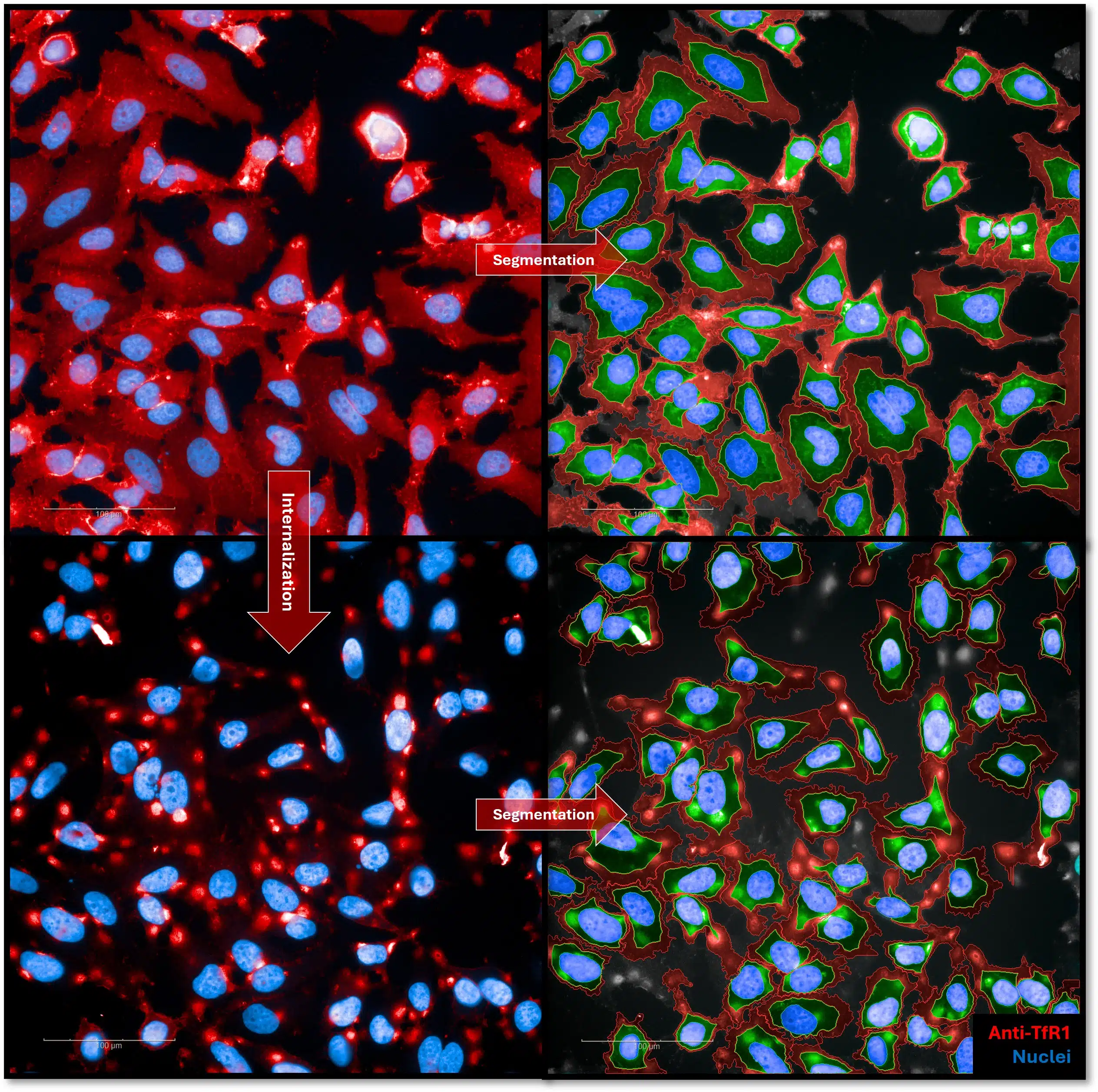
Expert-Guided Image Analysis for Confident Quantification
Our cell biology expertise informs the design of semi-automated segmentation workflows for accurate quantification of receptor internalization at the single-cell level. By combining biological context with robust image processing, we deliver high-confidence data you can trust.
Frequently Asked Questions
Answers to some of the most common questions about high-content receptor internalization assays.